La procédure
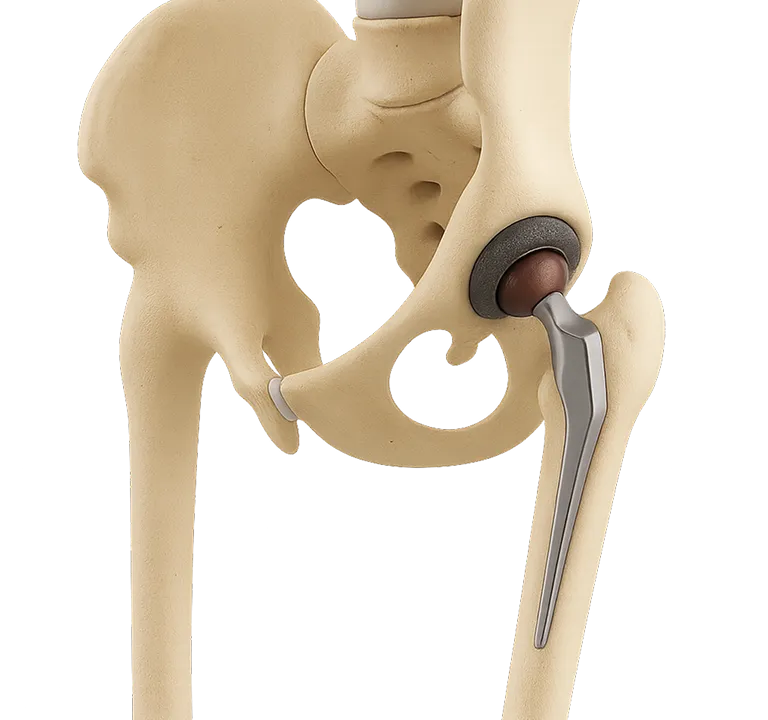
La hanche est une articulation sphéroïde où la tête arrondie du fémur se déplace à l'intérieur de l'acétabulum, la cavité qui maintient la tête en place. La tête arrondie du fémur est soutenue par le col fémoral, qui la relie au reste du fémur (votre os de la cuisse), vous permettant de bouger votre jambe lors de la marche. Un traumatisme physique majeur, entre autres causes, peut entraîner des fractures de la hanche, dont certaines ne peuvent être réparées par une technique de fixation à l'aide de vis, nécessitant le remplacement de la tête et du col fémoral par une prothèse.
Dans le cas d'un remplacement partiel de la hanche, aussi appelé arthroplastie partielle de la hanche ou hémiarthroplastie, seule la tête fémorale (la « boule » de l'articulation de la hanche) est remplacée par un implant prothétique, tandis que l'acétabulum (la cavité de la hanche) est laissé intact. Cette intervention est le plus souvent pratiquée pour les fractures du col fémoral, particulièrement chez les patients âgés souffrant d'ostéoporose ou d'autres conditions rendant le remplacement total de la hanche moins approprié. Votre chirurgien pourrait recommander une hémiarthroplastie si vous avez une fracture de la hanche qui ne peut être réparée avec des vis ou des plaques, afin de vous aider à retrouver votre mobilité, à soulager votre douleur et à éviter des complications futures. Une hémiarthroplastie dure généralement d'une à deux heures.
Risques et complications
Comme pour toute chirurgie, l'hémiarthroplastie comporte des risques. Les complications propres à cette intervention comprennent :
● Luxation de l'articulation prothétique (1 à 7 %)
● Fracture périprothétique (1,7 à 4 %)
● Infection du site chirurgical (2 à 7 %)
● Inégalité de la longueur des jambes
● Descellement aseptique (desserrage de la prothèse au fil du temps)
● Érosion ou protrusion acétabulaire
Les risques mineurs généraux liés à la chirurgie et à l'anesthésie comprennent les nausées, les vomissements, les maux de tête, les maux de gorge et la rétention urinaire. Les risques majeurs généraux comprennent les caillots sanguins, pouvant mener à une crise cardiaque ou à un accident vasculaire cérébral, les réactions allergiques, l'infection de la plaie chirurgicale et la pneumonie. Votre chirurgien prendra soin de discuter des risques pertinents avec vous avant l'intervention et prendra les précautions nécessaires pour minimiser le risque de complications.
À quoi s'attendre
Avant l'intervention, votre médecin examinera votre hanche et vous subirez un bilan préopératoire complet, qui comprendra probablement des analyses sanguines et des examens d'imagerie comme des radiographies ou une IRM, afin de planifier la chirurgie et de confirmer qu'elle vous convient. Pour minimiser les risques de complications, vous recevrez des antibiotiques avant l'opération pour prévenir les infections et pourriez recevoir des anticoagulants pour éviter la formation de caillots sanguins. L'anesthésie générale est couramment utilisée pour l'hémiarthroplastie, mais l'anesthésie régionale (p. ex., rachidienne ou péridurale) peut également être une option.
Le contrôle de la douleur après la chirurgie est essentiel à votre rétablissement. Votre chirurgien pourrait vous prescrire des analgésiques comme de l'ibuprofène (p. ex., Advil), de l'acétaminophène (p. ex., Tylenol), du naproxène (p. ex., Aleve) ou des opioïdes (p. ex., oxycodone) pour une gestion de la douleur à court terme. Dans certains cas, des blocs nerveux peuvent être administrés pour un soulagement immédiat de la douleur postopératoire.
Votre rétablissement
Après une hémiarthroplastie en chirurgie d'un jour, vous pourrez généralement retourner à la maison le jour même, à condition que votre chirurgien confirme que votre rétablissement se déroule comme prévu. Vos soins postopératoires comprendront des médicaments pour gérer la douleur et prévenir les caillots sanguins, ainsi qu'un début précoce de physiothérapie pour favoriser une récupération rapide. Il est crucial d'amorcer la physiothérapie pour votre rétablissement. Votre physiothérapeute vous guidera à travers un programme conçu pour restaurer votre mobilité, votre force et vos fonctions. Vous pouvez vous attendre à commencer des exercices légers et à marcher avec de l'aide dans les un ou deux jours suivant l'intervention. Durant votre convalescence, vous devrez éviter de soulever des charges lourdes et les activités à fort impact, comme le travail manuel ou les sports intenses. Un rétablissement complet, permettant un retour à toutes vos activités, prend généralement de trois à six mois. Vos rendez-vous de suivi avec votre chirurgien permettront de confirmer que votre rétablissement suit son cours.
.svg)

.svg)
.svg)
.svg)
.svg)
