
Knee Replacement Recovery Timeline: A Week-by-Week Guide
Follow Ortho MD Surgery's week-by-week knee replacement recovery guide, from hospital discharge to month twelve. Book a consultation with our team today.
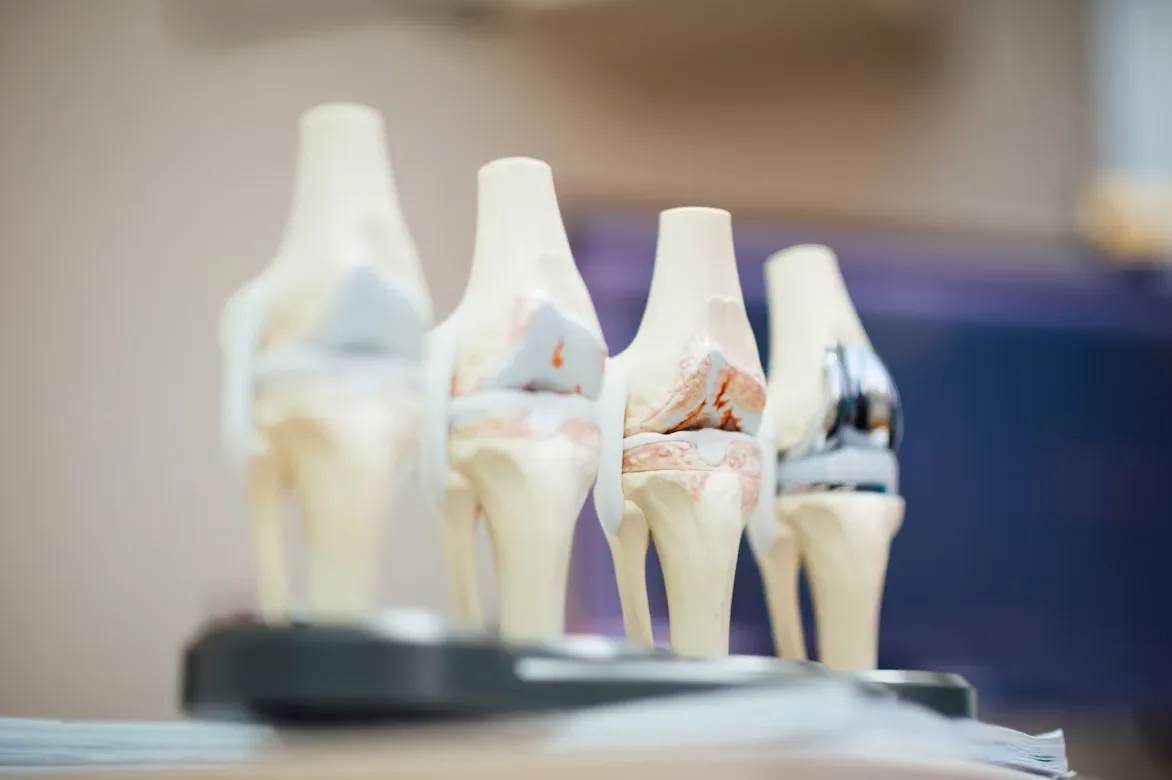
Getting knee replacement surgery can leave you with a lot of questions. Your recovery timeline, and how what happens after the surgery is done, may be a concern at the front of your mind. At Ortho MD Surgery, where we perform knee replacements year-round and follow our patients from the first consultation through the final follow-up visit. This guide will walk you through recovery process in detail, week by week, based on what can be observed in our own clinic.
It's important to remember that every knee heals at its own pace, since age, weight, pre-surgery strength, and how consistently you follow your doctor's orders all shift the numbers below by a week or two in either direction. Treat this as a map, then let your surgeon and physiotherapist adjust the route.
Your Recovery, Stage by Stage
Days 1 to 3: The Hospital Stay
Most patients stand up on the day of knee replacement surgery, because early movement lowers the risk of blood clots and gets the new joint working while anesthesia-related pain coverage is still active. During these first days, the care team focuses on pain control, wound monitoring, and your first steps with a walker.
A physiotherapist will show you how to get in and out of bed safely, how to sit down without twisting the knee, and how to climb a step or two. Swelling is significant at this stage, and that is expected, so ice, elevation, and prescribed medication keep it manageable.
Before discharge, you should be able to walk short distances with a walker, bend the knee to roughly 70 or 80 degrees, and get to the bathroom on your own. Most patients go home within one to three days.
Weeks 1 and 2: Settling In at Home
The first two weeks at home following a knee replacement ask more of you than the hospital did, because the daily work is now yours. You can expect to walk several short sessions a day with your walker, ice the knee regularly, and complete the exercise sheet your physiotherapist gave you.
Pain typically peaks around day four or five, then begins a slow decline. Sleep is often difficult in this period because the knee frequently aches most at night, and propping the leg on a pillow with the knee straight helps. Keep the incision clean and dry, and watch for warning signs such as fever, increasing redness around the wound, drainage, or calf pain, any of which warrants a call to your surgeon's office the same day.
By the end of week two, staples or sutures usually come out. Depending on your progress, you may be able to trade your walker for a cane inside the house, and your bend should be approaching 90 degrees.
Weeks 3 to 6: Building Range and Confidence
Progress becomes visible in this stretch of knee replacement recovery. Formal physiotherapy sessions increase, and the goals shift from protecting the knee to pushing it. Your therapist will work on getting the bend past 100 degrees and, just as important, getting the leg fully straight. Full extension is the target patients often underestimate, because a knee that cannot straighten completely changes your gait and strains the hip and back, so we ask patients to work on it every day.
You may notice your walking distance begin to quickly increase during this time, with many patients managing 15 to 20 minutes of continuous walking by week four and setting the cane aside around week five or six. If your surgery was on the left knee and you drive an automatic, driving often returns in this window with your surgeon's approval, while right-knee patients wait longer, usually until braking strength and reaction time are back.
Swelling has not disappeared yet, and a knee that swells after a productive therapy session is normal at this stage. Ice it, elevate it, and continue the program the next day.
Weeks 7 to 12: Strength Takes Over
Around week seven of knee replacement recovery, physiotherapy shifts from range of motion to strength and endurance, so step-ups, stationary cycling, leg presses, and balance work enter the program. The bend should reach 110 to 120 degrees for most patients, which covers stairs, chairs, car seats, and nearly everything daily life demands.
Walking becomes comfortable, and many patients report their first full day without thinking about the knee somewhere in this period. Stiffness after long periods of sitting still occurs, especially in the morning, and it usually loosens within a few minutes of movement.
By week twelve, low-impact activities typically resume with doctor's approval, so swimming, cycling, golf, and longer walks are all reasonable with your surgeon's approval. High-impact sports such as running and singles tennis are a different matter, and it is strongly advised against them permanently to protect your implant and health.
Months 4 to 12: The Long Tail of Healing
A replaced knee keeps improving long after formal therapy ends, since deep tissue healing continues for a full year, sometimes longer. Occasional warmth in the joint, mild swelling after heavy activity, and clicking sounds from the implant are all common well into month six and usually fade with time.
Strength gains during this period come from staying active. Patients who keep cycling, walking, or doing home exercises through months four to twelve show better function at the one-year mark than those who stop the day therapy ends, and we see this pattern consistently in our clinic. Follow-up appointments taper off, typically at six weeks, three months, one year, and then at longer intervals to monitor the implant. Modern implants used in a total knee replacement commonly last 15 to 20 years or more, and how you treat the joint in this first year sets the tone for the years that follow.
What Speeds Recovery Up and What Slows It Down
Exercise compliance is the single biggest factor within your control after a knee replacement, and patients who complete their home program daily recover faster. Pre-surgery conditioning helps too, since strengthening the quadriceps in the weeks before the operation gives you a head start that pays off in weeks one through six.
On the other side, smoking slows wound and bone healing measurably, and we encourage every patient to quit before surgery. Poorly controlled diabetes raises infection risk, and skipping ice and elevation lets swelling linger, which makes the knee resist bending and stalls progress in therapy. None of these are reasons to delay a needed surgery, but each one deserves attention beforehand.
Nutrition counts as well, since adequate protein supports tissue repair and staying hydrated helps with medication side effects. Small habits, followed daily, add up over twelve weeks and can help with your recovery process.
Frequently Asked Questions
How long until I can walk normally after knee replacement?
It varies from person to person, but most patients walk without a cane by week five or six and walk with a natural gait by month three. Short assisted walks begin the day of surgery. Building from a walker to a cane to independent walking is gradual, and consistent physiotherapy makes that progression faster and smoother.
When can I drive again after knee replacement surgery?
Driving typically resumes four to six weeks after surgery, once you are off narcotic pain medication and can brake with full strength. Left-knee patients with automatic transmissions often return sooner. Always get your surgeon's approval first, since insurance coverage can depend on documented medical clearance.
How painful is knee replacement recovery?
Pain is most intense during the first two weeks, usually peaking around day four or five, then declines steadily. Prescribed medication, ice, and elevation keep it controlled for most patients. By week six, many people manage with occasional over-the-counter medication, and discomfort after therapy sessions becomes the main complaint.
How long does a replaced knee last?
Modern knee implants commonly last 15 to 20 years, and many exceed that. Longevity depends on activity choices, body weight, and implant positioning at surgery. Avoiding high-impact sports and keeping up with scheduled follow-up visits gives the joint its best chance of lasting decades without revision.
Plan Your Recovery with Ortho MD Surgery
A clear timeline takes much of the guesswork out of preparing for surgery. At Ortho MD Surgery, our team walks every patient through this timeline in person, adjusted to their health, their home setup, and their goals. If you are considering surgery or have questions about any stage described above, reach out to our clinic to book a consultation. We will give you honest answers and a recovery plan built around you.
You may also like




Speak Directly with a Surgeon This Week
No referral needed.


